+26.5%
YoY caramel apple sales
+250%
TikTok followers
5.4x
greater total ROAS
Can creator and paid social drive results at the level of a single store, a single market, a single studio? The short answer is yes, with conditions.
Social platforms can target by geography, and creators can be chosen by where they live. Whether that adds up to local outcomes is a separate question, and the answer changes with the job you give the program. We’ve run local and geo-targeted programs for many clients; below is a sampling. The goals and footprints differed, and so did how tightly we targeted.
Here is what each program showed.
How do you grow a following where the stores are?
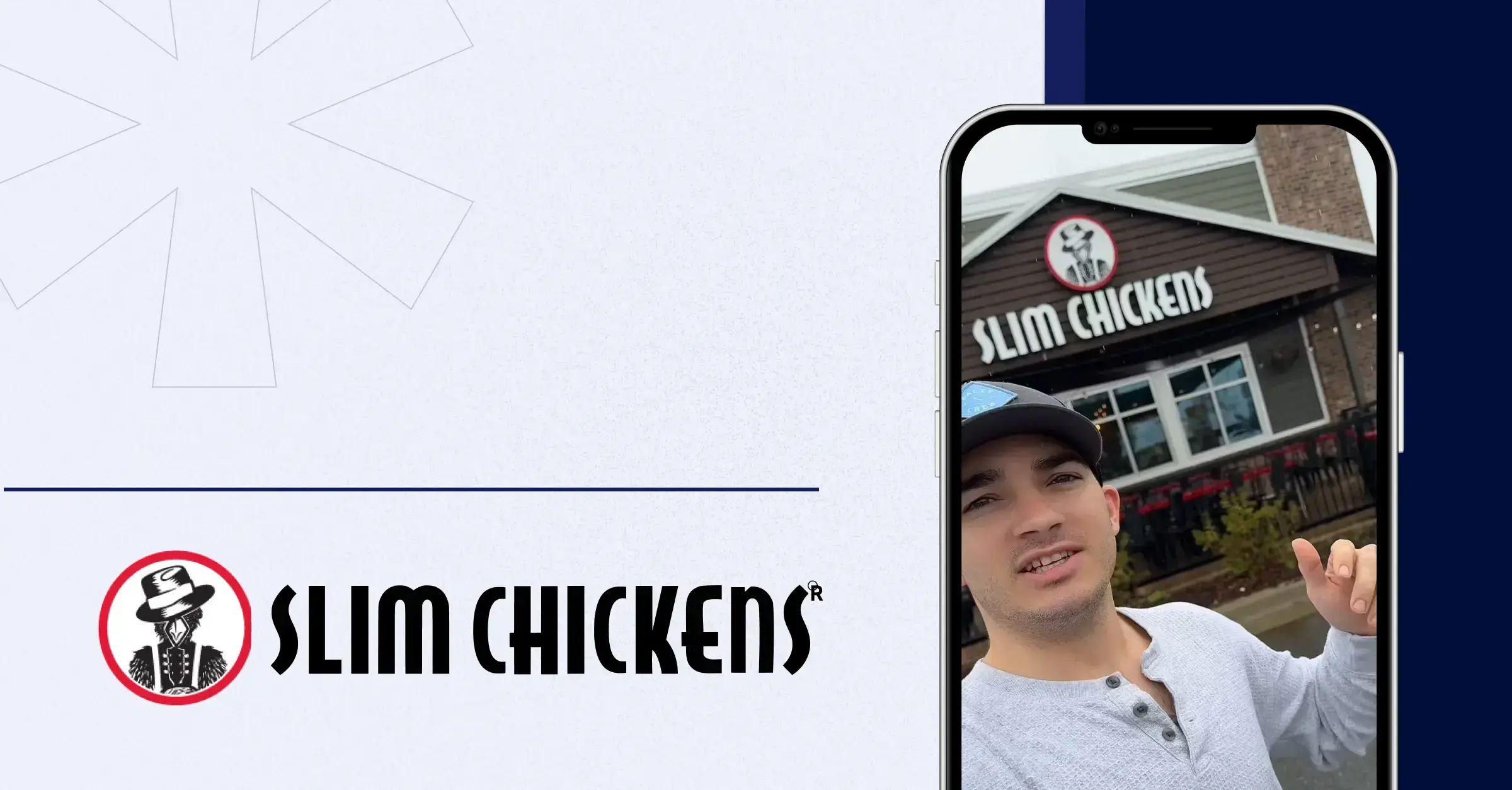
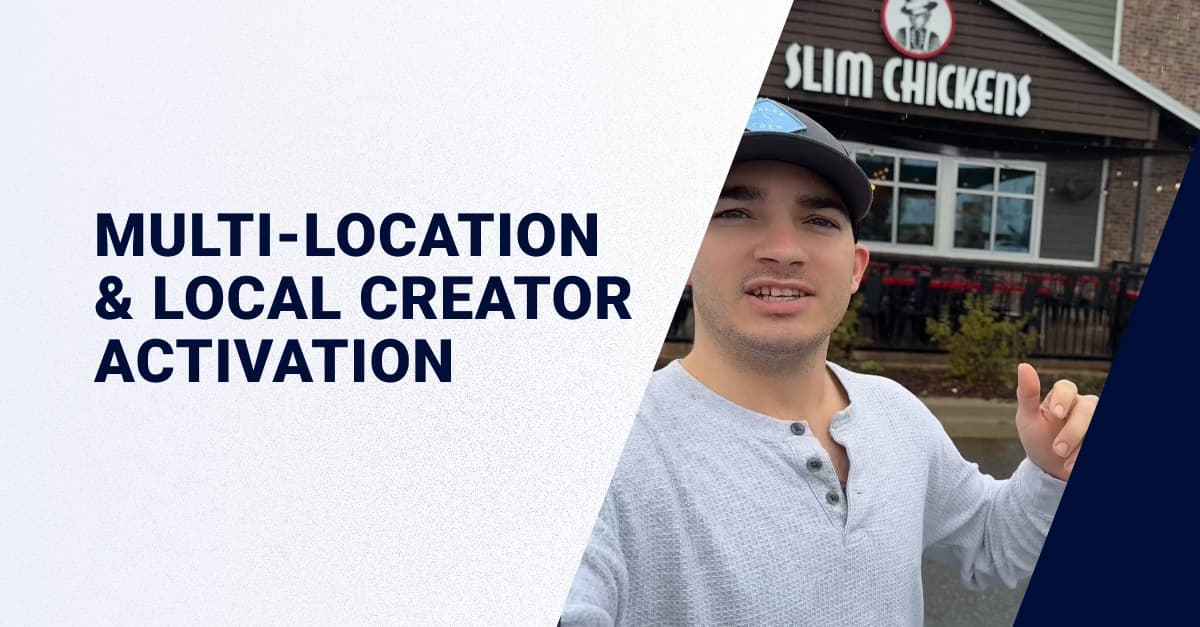
Slim Chickens ran three limited-time launches in a row: Dry Rub Wings, the Memphis BBQ Chicken Sandwich, and the Big Dill Chicken Sandwich. They wanted to build awareness around the launches while also building followers and engagement. A national push would have spread that growth evenly across the country; however, the restaurants are clustered in southern states and Texas.
We went where the locations are densest and built the full creator range: mega creators for national reach, micro foodie and lifestyle creators with local followings in those markets. Creators did in-store promos at specific named restaurants, and paid amplification targeted the same markets.
TikTok following grew 250%, and a dedicated follower campaign grew it 108% on its own. Content drew 7.6M cross-channel video views and 5M+ post engagements at a 4.9% average engagement rate, with 72% of engagement coming from the 18-34 core demo.
Read the full Slim Chickens case study
How do you turn a novelty holiday into store sales?
Novelty holidays arrive every year. Turning one into sales at specific Rocky Mountain Chocolate Factory (RMCF) stores is a different challenge than building general awareness: it needs the right markets and the right content.
We built a strategy with 11 creators based in each one of RMCF’s key store markets and filmed at their local standalone store: one hero Reel and three Stories, with a swipe-up to find the nearest location. Paid amplification ran for three days behind the top-performing organic posts.
Caramel apple sales grew 25.6% YoY, and overall store sales grew 7.5%, on 2.9M unique reach and a 14.3% paid engagement rate.
How do you build awareness for a store opening without paying for audiences who can’t visit?
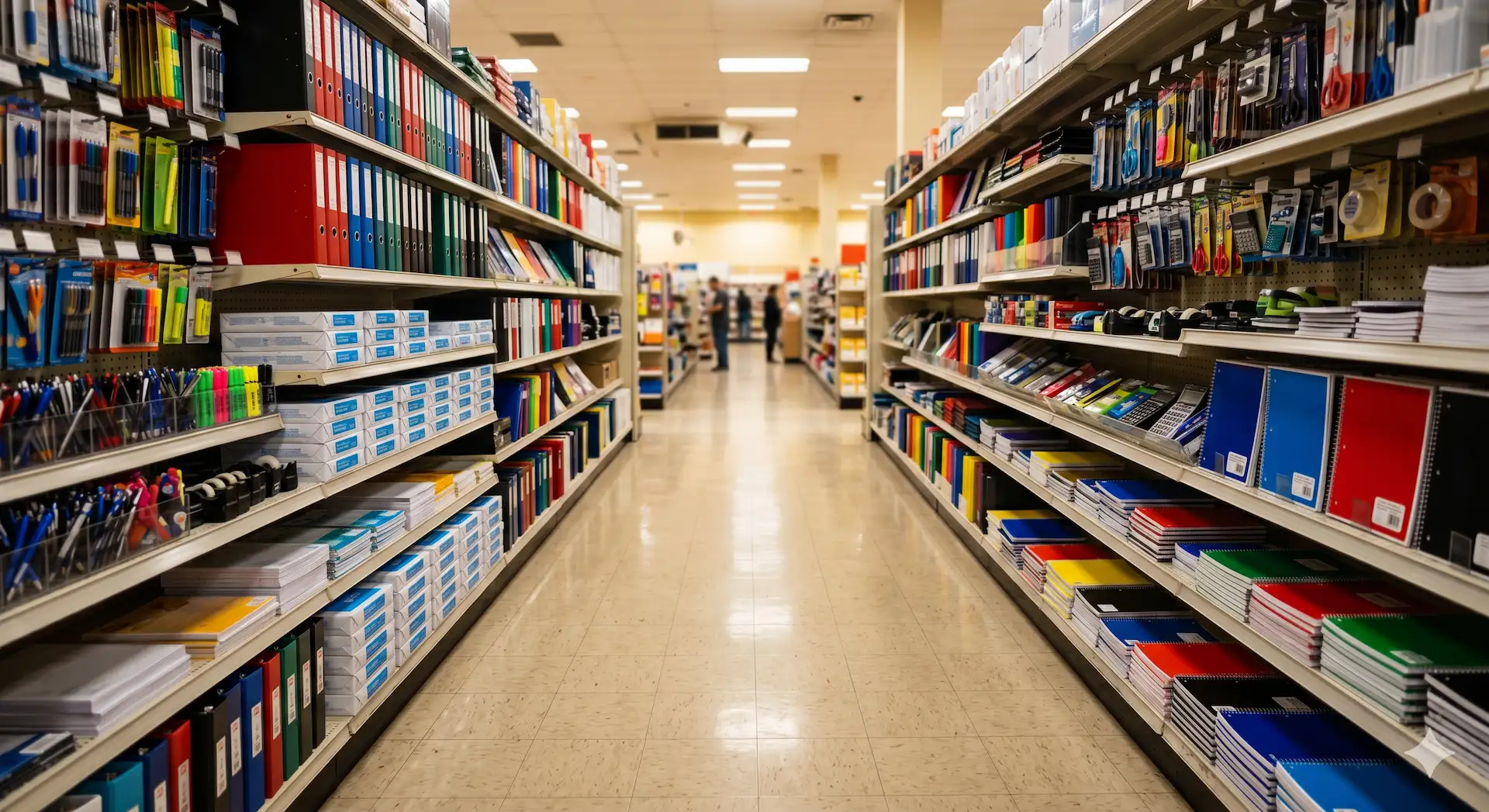
A national office supply retailer reimagined its stores and held grand re-openings in four DMAs. The audience that mattered lived in those four markets, and the job was to teach them about the printing, shipping, and travel services available in-store and online.
We combined influencer and branded content across Reach, Awareness, and Video View campaigns to see which drove better audience costs, engagement, and ROAS. DMA inclusion kept impressions inside the four markets, and each market ran as its own campaign so investment stayed controlled.
Link click-through rate rose 60% across Meta and TikTok, :03 video view rate on Meta was 121% higher, and ROAS rose 2%+.
When does local targeting cost more than it returns?
Restore Hyper Wellness set a cost target for each campaign type, and its budget had two jobs: build a national brand and fill individual studios. With revenue tied to walk-ins at individual studios, hyper-local targeting seemed like the natural strategy.
We ran Google Search, Performance Max, YouTube, and Meta, each campaign type against its own target, and tested the local approach. In awareness campaigns, hyper-local targeting raised delivery costs, so we consolidated geography and let the auction find the audience. In conversion campaigns, every studio location stayed in.
The program cleared all three targets: gift card purchases came in 5% under, membership contacts 18% under, and Cyber Week purchases on Meta 13% under.
Read the full Restore Hyper Wellness case study
What the four programs show
Creator and paid social drove local results in all four programs. How tightly we targeted depended on the job.
When the goal was a sale at a specific location, targeting got precise. RMCF sent each creator to a named store, and Restore kept every studio in its conversion campaigns.
When the footprint was uneven, concentration beat coverage. Slim Chickens built its following in the markets with the most restaurants instead of spreading it thin nationally.
Awareness was where narrower geography stopped paying. In Restore’s awareness campaigns, tighter targeting cost more, so we widened it.
Local targeting carries a price, and each program put the line in a different place.